
Introduction:
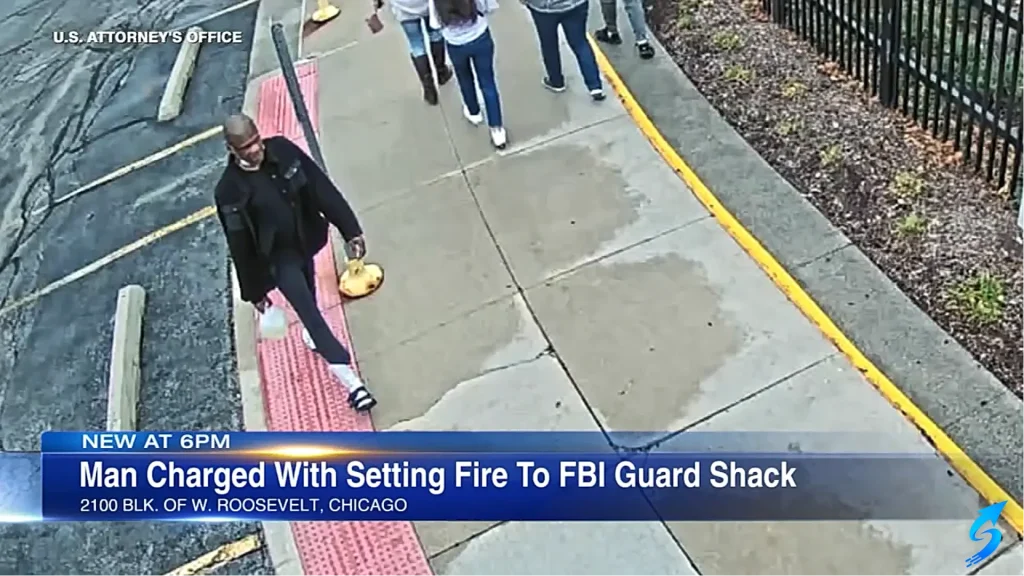
Nowadays, with the expansion of societies and advancements in tools, the occurrence of crimes has also increased. Some individuals misuse technology and use it for unlawful purposes. However, these same technologies have a significant application in identifying and proving crimes. For example, CCTV cameras with their recorded images and videos can serve as valuable evidence for facial recognition, license plate recognition, and other relevant information. In this article, we will examine Facial Composite From CCTV images.
As a team, we, as SuperResolution, developed a system for image deblurring, facial composite, and license plate recognition. Utilizing cutting-edge tools and sciences such as programming algorithms and artificial intelligence, we help retrieve information and enhance the clarity of your images. In this article, we will acquaint you with the process of facial recognition in the SuperResolution system.
What is facial Composition?
Facial Composition, in general, is the process of recreating the face of a criminal or a desired individual based on the details and characteristics that remain in the minds of witnesses or recorded evidence. This process is performed by a forensic artist.
The above definition is a general definition that is used by many countries and security organizations around the world, such as the CIA and the FBI and has helped in the investigation of many cases. Drawing a portrait by hand is an old, reliable, and widely used method in facial composition.
The role of technology in facial recognition and Facial Composite From CCTV images
With the advancement of science and technology in today’s world, alternatives to all manual work and activities that were done in the past have emerged as new technologies and have been facilitated by experts in each field.
In the face detection or Facial Composite From CCTV images field, specialized software and programs have been designed to better and more comprehensively depict faces with more details. However, facial reconstruction using computer programs is sometimes not a complete solution to meet the requirements. This is where integrating modern sciences and human capabilities with older methods provides a complete solution to finding a lost face.

The Importance of Facial Composite From CCTV images
In police cases, including criminal activities, theft, assault, and even terrorism, finding the faces of individuals holds special importance. It greatly impacts the identification of the main culprit, the understanding of the crime’s motives and roots, and other significant events.
Facial retrieval prevents the recurrence of crimes by leading to the arrest or identification of individuals wanted for interrogation.
Until recently, facial composition technologies mostly relied on traditional methods and piece-by-piece reconstruction. However, with advancements in research at British universities, new systems called holistic or global systems have been invented, which utilize evolutionary principles for facial detection.
These systems are generally known as holistic or global systems, and their main objective is to create a likeness with the suspect’s face using evolutionary mechanisms. Using this method, witness responses to a group of faces gradually lead to the creation of an image with increasing accuracy. Extensive research on facial recognition has been conducted by some universities, and the most prominent ones are discussed below. Additionally, several websites for online facial recognition will be introduced.
- University of Kent: One of these systems is EFIT-V, developed by the University of Kent. This system utilizes an evolutionary approach to represent faces.
- University of Stirling, Lancaster University, and University of Winchester: Another system called EvoFIT has been developed by the University of Stirling, Lancaster University, and University of Winchester. This system also employs evolutionary concepts for facial detection.
- University of Cape Town, South Africa: Another system called ID has been developed by the University of Cape Town in South Africa. This system also utilizes evolutionary mechanisms for facial detection.
An Evolutionary Facial Recognition System
New methods for facial composition, such as Gradient Face Encoding (GFE), are experimental evolutionary facial recognition systems that use image gradients instead of facial features for representation. This method appears to provide better results.
Applications of Facial Recognition in Police Files
Having an image of a criminal is crucial in police and criminal files because having this type of information can cast doubt on individuals and subject them to investigation and pursuit. Facial recognition technology is particularly helpful in the following cases:
-
Identifying suspects
One of the main applications of facial recognition in police files is the identification of suspects. Crimes are usually accompanied by recording images and videos of the perpetrators. By using facial recognition technology, suspicious individuals can easily be identified, and their connection to the crimes can be investigated.
-
Tracking criminals
In tracking criminals and fugitives, facial recognition is a highly effective tool. Images and recorded videos of offenders and suspicious individuals can be stored in police databases, and when these individuals are identified, they can be quickly apprehended.
-
Crime prevention
facial composition is also used as a preventive tool. Installing surveillance cameras with facial detection capabilities in sensitive and public areas intimidates suspicious individuals and offenders from committing crimes. It keeps the possibility of “being identified” in their minds, which promotes a greater sense of security in society.
-
Challenges and Solutions in Facial Composite From CCTV images
The use of facial composition in police files comes with its own set of challenges. Important challenges include privacy preservation, misidentifications, and the need for sufficient accuracy in person identification. To address these challenges, facial recognition algorithms and models need to be continuously updated and trained. However, these challenges may remain unresolved. In such cases, relying on other evidence and clues in the investigation process is necessary, and even vital.
Facial Composite From CCTV images process
We have partnered with a team of expert image-processing experts and collaborated with artists and specialists in the field of face reconstruction and anatomy.
For more information, you can visit the website of the main system of this field here.
Our experts start their work by receiving your raw footage and images captured by surveillance cameras and uploaded onto our system. After reviewing and identifying the best frames from your footage, these frames are processed using our specialized image processing software, which is the first registered image processing software in Iran, to enhance image clarity by reducing noise and blurring.
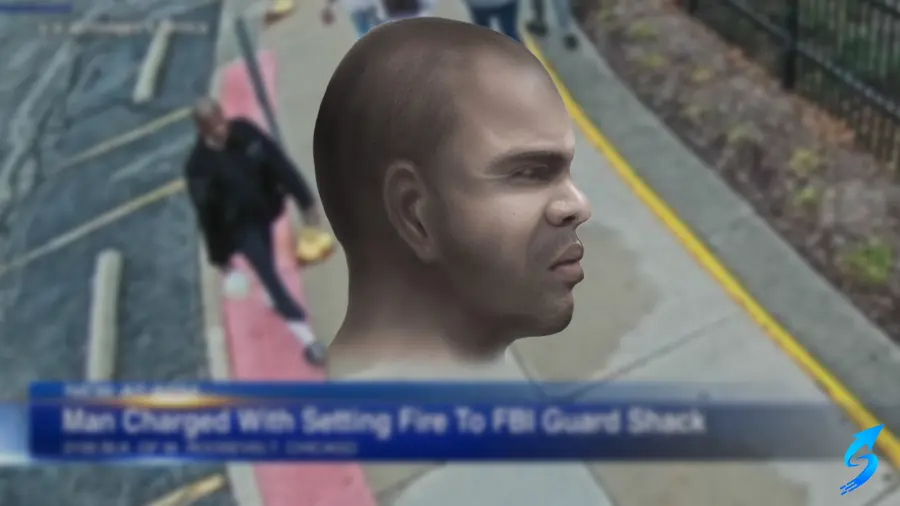
At this stage, the extracted images from your footage are sent to the design and Facial composite department, where our team of artists and Facial Imaging operators work towards recreating the best and most accurate representation of your face based on the provided images.
After placing several frames of the images together, and comparing and examining all aspects and angles, they begin the reconstruction of the desired face. Utmost precision and delicacy are taken into consideration throughout this process.