

AI Supporting and Assisting Police Forces
One of the most visible ways AI supporting and assisting police forces appears is through advanced surveillance systems. AI-powered software can process video feeds from thousands of cameras in real time, automatically detecting suspicious activity, identifying known suspects, or even reading license plates. Facial recognition and vehicle identification tools, when used with clear ethical guidelines, allow for quicker response times and more accurate tracking of criminal suspects.
The potential of AI supporting and assisting police forces is vast and still evolving. As technology advances, AI will likely become more deeply integrated into every aspect of policing from drone surveillance to automated report writing and even AI-assisted negotiations in hostage situations.
Enhancing Surveillance and Monitoring
One of the most visible ways AI supporting and assisting police forces is through advanced surveillance systems. AI-powered software can process video feeds from thousands of cameras in real time, automatically detecting suspicious activity, identifying known suspects, or even reading license plates. Facial recognition and vehicle identification tools, when used with clear ethical guidelines, allow for quicker response times and more accurate tracking of criminal suspects.

For instance, AI-based image enhancement technologies can deblur low-quality footage from security cameras, making previously unreadable license plates legible. This is particularly useful in hit-and-run cases or incidents involving stolen vehicles. Systems like these have been adopted in major cities to fight urban crime more efficiently.
Predictive Policing and Crime Prevention
AI has also proven valuable in predictive policing a method that uses data analytics to forecast where crimes are likely to occur. By analyzing historical crime data, demographic information, and environmental factors, AI models can generate heat maps of high-risk areas. This allows police departments to allocate resources more effectively and increase patrols in specific neighborhoods.
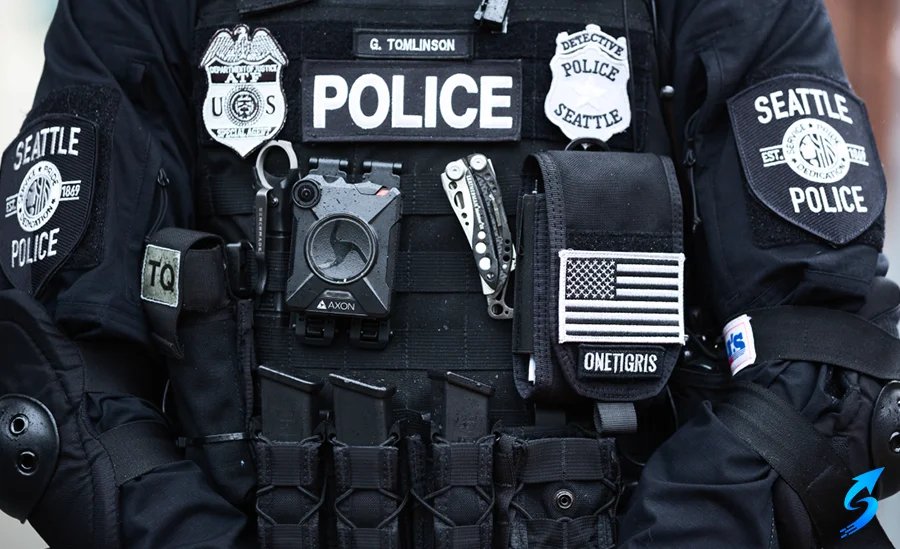
While predictive policing is a powerful tool, it must be approached cautiously. Transparency and accountability are key, ensuring that these systems do not reinforce bias or result in over-policing of certain communities.
Assisting in Criminal Investigations
AI supporting and assisting police forces also accelerates investigative processes by quickly analyzing massive amounts of data such as phone records, social media posts, or financial transactions to identify potential leads. Natural language processing (NLP) tools can sift through reports and written documents to extract key information, saving detectives countless hours.
Moreover, AI algorithms can compare crime scene evidence with national databases, identifying links between crimes that might go unnoticed by human investigators. Machine learning tools are being used in digital forensics to extract and interpret information from electronic devices critical in cybercrime investigations.
AI in Emergency Response and Dispatch
AI plays a critical role in emergency response systems. Smart dispatch systems use AI to prioritize calls based on urgency, location, and resource availability. Chatbots and automated phone agents can assist 911 operators by collecting basic information, enabling faster response from first responders.
Additionally, AI can analyze ongoing incidents in real time, suggesting optimal deployment routes for police units or anticipating crowd behavior during large events. These capabilities make operations more coordinated and responsive, ultimately saving lives.
Training and Simulation
Virtual reality (VR) and AI-powered training simulations are revolutionizing police training programs. Officers can now practice responding to various real life scenarios in a controlled, risk-free environment. AI systems adapt in real time, presenting evolving situations that test decision-making, judgment, and emotional control.
These simulations help build situational awareness and improve de escalation tactics, which are increasingly important in modern policing. Such training tools also allow departments to measure performance and identify areas where officers may need additional support or education.
Challenges and Ethical Considerations
Despite its benefits, the use of AI in policing raises several ethical and legal concerns. Issues of privacy, surveillance overreach, algorithmic bias, and lack of transparency have sparked public debate. It is essential that police departments implement AI responsibly, with oversight mechanisms, clear regulations, and input from community stakeholders.
Transparency is especially important in maintaining public trust. Citizens must understand how their data is being used, how AI decisions are made, and how officers are held accountable for actions influenced by AI systems.
Read More: Recognition Camera Behind a Mask, Solution?
Moreover, data quality is a crucial factor. Poor or biased data can lead to flawed AI outputs, potentially resulting in wrongful accusations or unjust profiling. Ongoing audits and diverse data inputs are necessary to minimize such risks.
The Future of AI in Law Enforcement
The potential of AI supporting and assisting police forces is vast and still evolving. As technology advances, AI will likely become more deeply integrated into every aspect of policing from drone surveillance to automated report writing and even AI-assisted negotiations in hostage situations.

Importantly, the future of AI in policing must be guided by ethical principles, human oversight, and community collaboration. AI should enhance not replace human judgment and empathy. It should be used as a tool to protect rights, improve safety, and ensure justice.
Countries that strike the right balance between innovation and responsibility will be better equipped to face future security challenges while preserving the values of a democratic society.