

In today’s digital age, the quality of images can make or break our perception of a moment. From cherished family photos to critical surveillance footage, the clarity and detail of an image are paramount. Yet, many images suffer from low resolution, blurriness, or pixelation, obscuring important details and diminishing their impact. Fortunately, advancements in image processing technology, particularly through the technique known as super resolution, are transforming low-quality images into high-definition masterpieces. This article explores how super resolution works, its practical applications, and why it is becoming a game-changer in fields ranging from entertainment to forensic science.
What is Super Resolution?
Super resolution is a process that enhances the resolution of an image, effectively increasing its clarity and detail beyond its original state. Traditional methods of image enlargement, like basic interpolation, often result in images that look blurry or artificially smooth. In contrast, super resolution techniques reconstruct finer details that were not visible in the original image, creating a more realistic and sharper version.

At its core, super resolution works by estimating and recovering the missing information in a low-resolution image. Modern approaches leverage advanced algorithms, many of which are powered by artificial intelligence (AI) and deep learning. These methods learn from vast datasets of high-quality images to understand how details should appear when upscaled. By analyzing patterns and textures, the AI can predict and fill in the gaps, effectively converting a mediocre image into a vibrant, high-definition one.
How Does Super Resolution Work?
The magic behind super resolution lies in its sophisticated algorithms. There are several methods to achieve this transformation, each with its own strengths and limitations:
- Interpolation-Based Techniques:
Traditional methods, such as bilinear and bicubic interpolation, estimate new pixel values by averaging the surrounding pixels. Although these techniques are computationally simple and fast, they often result in a loss of sharpness and can introduce artifacts, particularly when enlarging images significantly. - Model-Based Approaches:
These methods incorporate mathematical models that consider the structural properties of images, such as edges and textures. By understanding these features, model-based techniques attempt to restore lost details more accurately. However, their performance is limited by the assumptions made about the image’s structure. - Deep Learning and AI Methods:
The most promising advancements in super resolution have come from deep learning. Convolutional Neural Networks (CNNs) and Generative Adversarial Networks (GANs) are at the forefront of this technology. These models are trained on extensive datasets, learning the nuances of high-resolution images. They can then apply this learned knowledge to enhance low-resolution inputs. For example, CNN-based models such as SRCNN (Super-Resolution Convolutional Neural Network) and GAN-based models like ESRGAN (Enhanced Super-Resolution Generative Adversarial Network) have set new standards in image quality, delivering outputs that are both sharp and photorealistic.
Practical Applications of Super Resolution
The potential applications of super resolution are vast and varied. Here are a few key areas where this technology is making a significant impact:
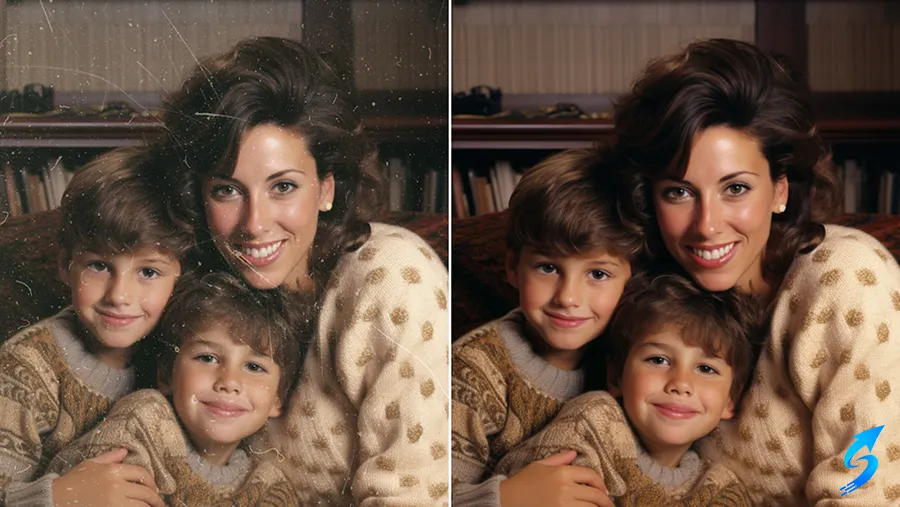
- Digital Photography and Social Media:
In an era where millions of photos are shared online every day, the quality of images can greatly influence viewer engagement. Super resolution can enhance old or low-quality photographs, breathing new life into memories. Social media platforms and photo-editing apps are increasingly integrating super resolution tools to help users improve the quality of their images effortlessly. - Entertainment and Media:
Classic films, television shows, and digital content often suffer from lower resolutions compared to today’s high-definition standards. Super resolution enables studios to upscale vintage footage, providing viewers with a more immersive and visually appealing experience. Video game developers are also exploring these techniques to enhance textures and environments, creating richer gaming worlds. - Medical Imaging:
High-resolution images are critical in medical diagnostics. Techniques such as MRI and CT scans can benefit from super resolution, allowing for more accurate interpretations and diagnoses. Enhanced imaging can lead to earlier detection of conditions and a better understanding of a patient’s health. - Security and Surveillance:
In security, every detail matters. Low-quality surveillance footage can hinder investigations and lead to misidentifications. Super resolution can clarify blurry or pixelated images, improving the accuracy of facial recognition systems and license plate identification. This enhancement is crucial for maintaining public safety and ensuring justice. - Forensic Analysis:
Perhaps one of the most compelling applications of super resolution is in forensic image and video enhancement. Law enforcement and forensic experts frequently deal with images and videos that are too poor in quality to extract meaningful evidence. Super resolution can reconstruct these visuals, making it possible to identify suspects, decode critical details, and support legal investigations. This technology is not just about making an image look better—it’s about uncovering the truth hidden within each pixel.
Super Resolution in Forensic Image and Video Enhancement
In the realm of forensic science, the quality of visual evidence can be the difference between solving a case and a missed opportunity. Low-quality images from security cameras or smartphone footage often leave investigators with insufficient detail, potentially stalling crucial leads. Super resolution techniques have emerged as a powerful tool to overcome these challenges.

By enhancing images and videos, forensic experts can retrieve valuable information that might otherwise be lost. For instance, a blurry face captured on a security camera can be transformed into a detailed image, providing clear insights that aid in identifying individuals. Similarly, enhancing the clarity of vehicle license plates from distant or grainy footage can lead to faster and more accurate suspect identification. These improvements not only bolster the investigative process but also uphold the integrity of the judicial system by ensuring that evidence is as reliable as possible.
More read: What is resolution?
Our Mission: A Commitment to Forensic Image and Video Enhancement
Recognizing the transformative potential of super resolution, we established our brand with a specific focus on forensic image and video enhancement. Our mission is to leverage the latest advancements in AI and deep learning to bring clarity to critical visual evidence. We believe that every image has a story to tell, and by enhancing low-quality visuals, we can help uncover the truth.
Our state-of-the-art technology is designed to empower law enforcement agencies, forensic experts, and security professionals. By providing them with the tools to enhance and analyze images, we are not only improving the quality of visual evidence but also contributing to safer communities and more effective investigations. Our commitment extends beyond technology—we are dedicated to supporting the professionals who work tirelessly to ensure justice and security.
Conclusion
Transforming low-quality images into high-definition masterpieces is more than just a technical challenge; it is an essential endeavor that impacts multiple facets of our lives. From revitalizing cherished memories to playing a pivotal role in forensic investigations, the power of super resolution is undeniable. As technology continues to evolve, the methods we use to enhance and interpret images will only become more sophisticated, offering new possibilities for clarity and insight.
Super resolution has opened the door to a world where every detail matters, and every pixel tells a story. Whether you are a photography enthusiast, a media professional, or a forensic expert, the advancements in image enhancement technology offer exciting opportunities to see the world in a new light. Join us on this journey as we continue to push the boundaries of what is possible—transforming low-quality images into high-definition masterpieces, one pixel at a time.