

Introduction
Suspicious motion detection using artificial intelligence (AI) is a complex and multifaceted process that combines input data, preprocessing, feature extraction, machine learning models, and monitoring systems. By analyzing visual or sensory data and identifying behavioral patterns, these systems can detect unusual or potentially dangerous movements.
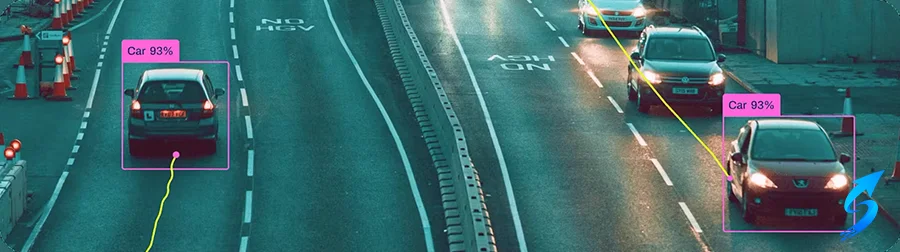
Suspicious Motion Detection in AI
Advanced machine learning algorithms, particularly deep neural networks, are used in AI-based suspicious motion detection systems. These algorithms enable the system to learn normal movements from training data and identify deviations.
The key challenges in this field include:
- Behavioral diversity
- Environmental changes
- Hardware limitations
- Lack of training data
- Privacy concerns
The applications of this technology are extensive, ranging from public security and healthcare to industry and cybersecurity. However, ethical considerations and the preservation of individual privacy are crucial prerequisites for its use.
What is Suspicious Motion Detection?
Suspicious motion detection refers to identifying unusual and potentially dangerous behaviors in surveillance and security environments. This process primarily utilizes AI and machine learning algorithms to analyze behavioral patterns in video or sensory data.

AI systems, when integrated with CCTV cameras, can monitor individuals in public or private spaces, identifying behaviors such as unusual gatherings, rapid movements, or fleeing from a scene (e.g., a hit-and-run). These techniques help identify immediate threats and can also aid in predicting and preventing crimes.
Additionally, suspicious motion detection is applied in areas such as traffic analysis, cybersecurity, healthcare, industrial operations, and retail, showcasing the growing importance of this technology in enhancing security and improving quality of life.
Examples of Suspicious Motions
Suspicious motions encompass a wide range of behaviors, generally indicating unusual, unexpected, or potentially dangerous activities. Depending on the context and situation, these behaviors may vary but can generally be classified into the following categories:
- Rapid and Sudden Movements: Actions like sprinting, abrupt directional changes, or abnormally fast movements compared to others in the vicinity.
- Stealthy Behavior: Activities such as hiding, constantly observing cameras, or attempting to avoid being seen.
- Unusual Gatherings: Unexpected crowds of people at a specific time and place, especially in secure areas.
- Object Tampering: Unauthorized attempts to unlock, remove, or manipulate objects or equipment.
- Unauthorized Access or Exit: Entering restricted areas or leaving premises in unusual or concealed ways.
- Repetitive and Unnatural Actions: Behaviors like continuous pacing in a confined area without a logical reason.
- Use of Suspicious Tools: Carrying tools such as knives, lock-picking devices, or recording equipment.
- Public Disturbance: Actions that incite fear or disrupt public order.
AI-Based Suspicious Motion Detection
AI-based suspicious motion detection is an innovative technology that utilizes machine learning algorithms and computer vision to understand and analyze human or object movements in various environments.
These systems can interpret video or image data to recognize human motions, such as walking, running, or more complex activities. This process typically involves deep neural network models, such as CNNs (Convolutional Neural Networks) or RNNs (Recurrent Neural Networks), which allow precise extraction and analysis of spatial and temporal patterns.
Applications of this technology span security systems, healthcare, industry, shopping malls, and cybersecurity.
Why is Suspicious Motion Detection Necessary?
With the growth of urban populations and expanding cities, security threats and dangerous behaviors are also on the rise. Suspicious motion detection has become a necessity for ensuring safety and security in today’s world.
This technology not only aids in identifying and preventing undesirable incidents but also plays a crucial role in crisis management and timely responses to threats.
For instance:
- In airports, shopping centers, and public buildings, suspicious motion detection can help prevent dangerous incidents.
- In healthcare, this technology can detect emergency situations early and save lives.
Overall, suspicious motion detection is not just a critical security measure but also a valuable preventive and protective social tool.
more read: Forensic Image and Video Enhancement Solutions for Law Enforcement
Applications of AI-Based Suspicious Motion Detection
The applications of AI-based suspicious motion detection are diverse and span across many domains:
- Public Security and Urban Monitoring
- Detecting suspicious movements in traffic and transportation systems
- Preventing crimes in private and public spaces
- Ensuring security in airports, train stations, and subways
- Healthcare
- Monitoring elderly patients or individuals with health conditions
- Early detection of diseases like Parkinson’s or Alzheimer’s for timely intervention
- Industry and Manufacturing
- Enhancing workplace safety
- Monitoring production processes
- Preventing theft or equipment damage
- Retail and Shopping Malls
- Detecting shoplifting or suspicious customer behavior (e.g., hiding items or loitering in secluded areas)
- Improving customer experience through movement pattern analysis
- Cybersecurity
- Detecting anomalies in network behavior
- Recognizing unusual user actions on keyboards, devices, or systems to identify potential breaches or malicious activities
Methods for Suspicious Motion Detection
The methods for suspicious motion detection in AI are primarily based on image and video processing combined with machine learning techniques. These methods can be broadly categorized as follows:

- Pattern Recognition-Based Methods
- Motion Analysis: Detecting abnormal movement patterns through optical flow and edge detection techniques.
- Activity Recognition: Using CNNs and RNNs to distinguish between normal and abnormal activities.
- Posture Detection: Leveraging OpenPose or CNNs to identify unusual postures, such as falling, bending suddenly, or defensive stances.
- Deep Learning-Based Methods
- CNNs, RNNs, and Transformers are the primary techniques in deep learning for visual feature extraction, sequential data processing, and spatial-temporal analysis.
- Sensor Fusion-Based Methods
- Combining data from cameras, motion sensors, and audio sensors to enhance accuracy and reliability. This approach addresses incomplete or ambiguous data and reduces detection errors.
Conclusion
AI-based suspicious motion detection is revolutionizing security and safety across various sectors. With advancements in machine learning and computer vision, these systems can now provide timely and accurate detection of unusual behaviors, enabling proactive responses to potential threats.
As we move forward, the integration of ethical considerations and privacy protections will ensure the widespread and responsible adoption of this essential technology.