
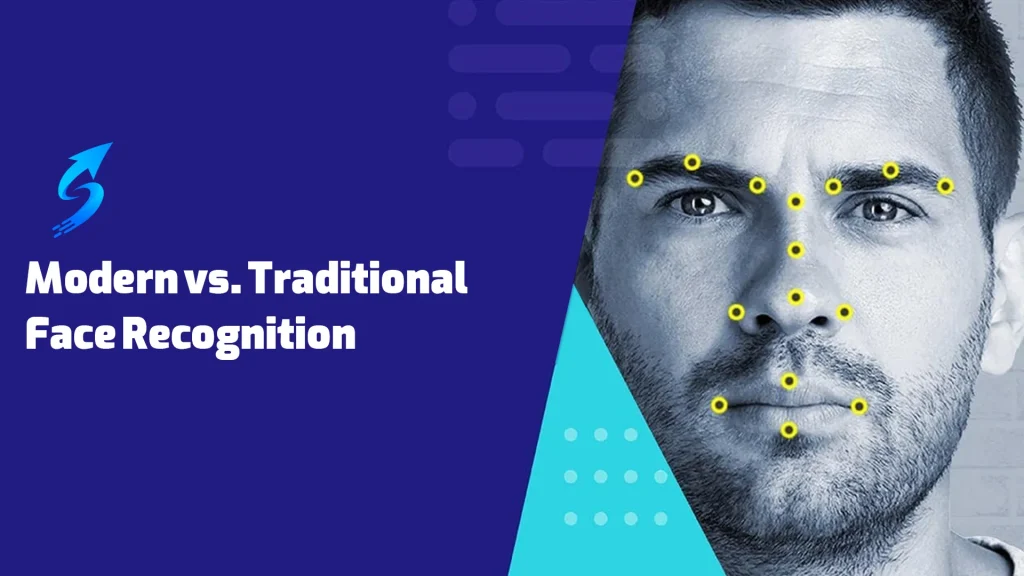
In today’s digital age, Modern vs. Traditional Face Recognition has become a vital discussion in the fields of security, surveillance, and biometric authentication. While traditional face recognition methods laid the groundwork for identity verification, modern approaches driven by artificial intelligence and deep learning have drastically improved accuracy, speed, and adaptability. This article explores the key differences, advantages, and challenges of both systems, providing valuable insights into the evolution of facial recognition technologies.
As facial recognition becomes increasingly embedded in our daily lives from unlocking smartphones to controlling access at borders and workplaces it is essential to understand how these systems have evolved. Traditional models relied heavily on geometric and handcrafted features, often struggling in uncontrolled environments. In contrast, modern AI-powered systems can handle diverse lighting, angles, and facial expressions with much higher reliability. Whether you’re building a secure infrastructure or simply curious about this technology’s potential, exploring the contrast between traditional and modern face recognition systems will help you make more informed decisions.
What Is Traditional Face Recognition?
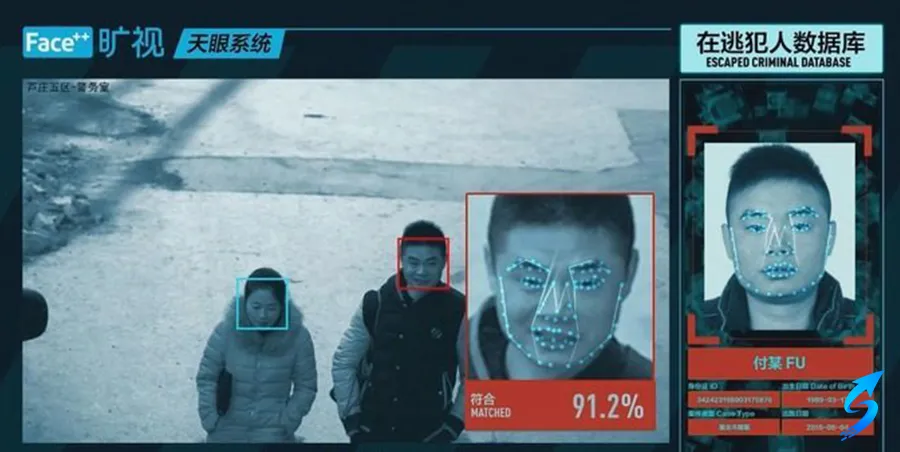
Traditional face recognition techniques rely heavily on geometric features and mathematical models. These systems typically measure the distance between key facial landmarks such as the eyes, nose, and mouth and use those distances to create a facial signature. The most commonly used algorithms in traditional systems include:
-
Eigenfaces: A method based on Principal Component Analysis (PCA)
-
Fisherfaces: An extension that uses Linear Discriminant Analysis (LDA)
-
Template Matching: Comparing input images to stored templates
While these techniques were groundbreaking in their time, they have several limitations. Their performance is highly dependent on lighting conditions, head orientation, facial expressions, and image resolution. They also require a controlled environment to function effectively, making them less suitable for real-time or complex scenarios.
The Rise of Modern Face Recognition
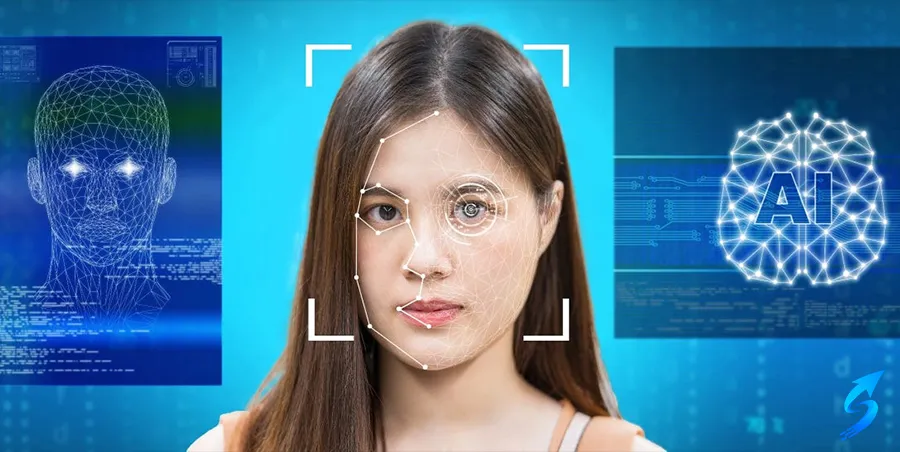
Modern face recognition leverages artificial intelligence, particularly deep learning and convolutional neural networks (CNNs). These systems automatically learn facial features from large datasets without needing manual selection of characteristics. Key innovations include:
-
FaceNet and DeepFace: Deep learning models that create facial embeddings
-
Real-time recognition: Modern systems can recognize faces in live video streams
-
High accuracy: Even under challenging conditions like low light or partial occlusion
Modern algorithms outperform traditional ones by a significant margin, especially in real-world environments. They can recognize faces across various poses, lighting, and backgrounds with impressive accuracy, making them ideal for surveillance, smartphones, banking, and border control.
Key Differences Between Traditional and Modern Techniques
| Feature | Traditional Methods | Modern Methods |
|---|---|---|
| Approach | Geometric & statistical | AI & deep learning |
| Accuracy | Moderate | High |
| Speed | Slower | Real-time |
| Scalability | Limited | Highly scalable |
| Robustness | Poor in varied conditions | Excellent in real-world scenarios |
| Training | Manual feature selection | Automatic feature learning |
Applications of Face Recognition
Modern applications have expanded dramatically:
-
Smartphones: Facial unlock systems
-
Retail analytics: Identifying customer demographics and behavior
-
Healthcare: Patient identity verification
-
Public safety: Real-time suspect detection in crowds
Today, modern systems are integrated into everyday life from unlocking smartphones and enhancing retail customer experiences to verifying patient identities in hospitals and enabling real-time threat detection in public spaces. This expansion reflects the shift from limited security-focused use to widespread adoption across industries.
Security and Privacy Concerns
Both traditional and modern systems face ethical questions, but modern systems raise greater concerns due to their reach and capability.
-
Data privacy: Concerns about mass surveillance and consent
-
Bias and fairness: AI models can show racial or gender bias if not trained on diverse datasets
-
Spoofing risks: Techniques like photo or video attacks challenge system integrity
Organizations deploying facial recognition must comply with privacy laws (e.g., GDPR, CCPA) and adopt transparent policies.
Advantages of Modern Face Recognition
-
Automation: No need for manual feature extraction
-
Learning capability: Improves over time with more data
-
Real-time performance: Ideal for dynamic environments like airports or events
-
Integration-ready: Can be used with other technologies such as AI-based video analytics and emotion detection
Limitations of Traditional Systems
-
Limited adaptability: Cannot easily handle changes in appearance (e.g., aging, makeup)
-
Rigid architecture: Difficult to scale and update
-
Low accuracy in uncontrolled environments
Future Outlook
Modern face recognition is still evolving. Emerging trends include:
-
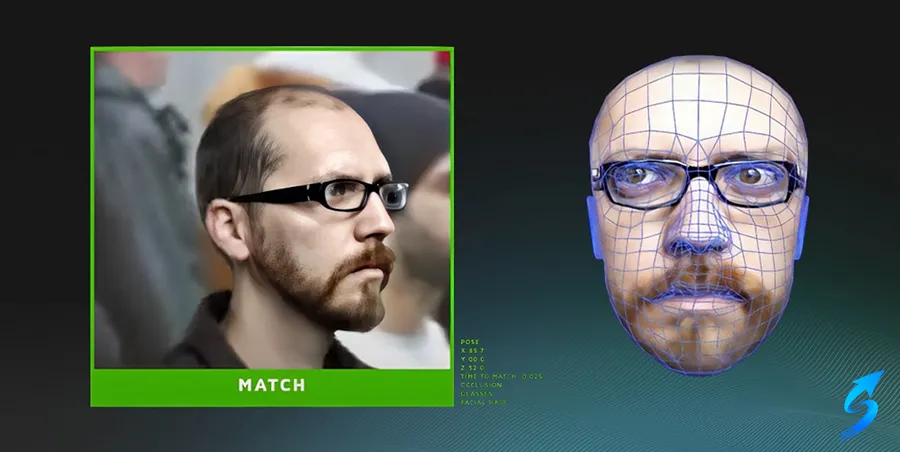
3D Face Recognition: Capturing depth and contours for more accuracy
-
Edge AI: Running facial recognition directly on devices for faster and more private processing
-
Federated Learning: Training models without centralized data storage
As these innovations mature, we can expect even more precise, secure, and privacy-aware solutions.
More read: Super Resolution enhancement in Security
SEO Best Practices Followed in This Article
-
Primary keyword used in the title, first paragraph, and headings
-
Secondary keywords such as “facial recognition technology”, “AI face recognition”, and “traditional biometric systems” included naturally
-
Concise paragraphs for readability
-
Proper use of headings for structure and SEO crawlers
-
Informative, relevant, and original content
Conclusion
The comparison between modern and traditional face recognition highlights a clear technological shift. While traditional methods helped pioneer biometric identification, modern face recognition systems provide unmatched accuracy, speed, and flexibility thanks to AI and deep learning. As facial recognition becomes more integrated into daily life—from unlocking phones to solving crimes—understanding this evolution is essential for both users and developers.
Whether you’re an IT professional, security consultant, or tech enthusiast, understanding Modern vs. Traditional Face Recognition can help you choose the best solution for your needs.